
Blood sugar monitors, also known as Continuous Glucose Monitors (CGMs), are small devices you can wear. They help people with diabetes keep track of their blood sugar levels (1). Before CGMs, they had to rely on finger-prick tests. Then CGMs offered continuous monitoring, making it easier to manage blood sugar throughout the day (1).
CGMs have recently expanded from diabetes management to wellness. They are now marketed to help reduce diabetes risk, aid weight loss, personalise diets, and enhance performance (1,2,3). If you have been wondering whether you should wear a blood sugar monitor to reach your health goals, you are not alone.
Here’s a spoiler: if you don’t have diabetes, there’s no real need to track your blood sugar, your body already does that for you (3). Yet more and more people are turning to CGMs in the hope that tracking their blood sugar will unlock better health.
Does it actually help or could it be doing more harm than good?
Let’s take a look.
How Your Blood Sugar Naturally Changes Throughout the Day
Blood sugar levels rise and fall for everyone throughout the day, particularly after eating. This is a normal and regulated process (1,4).
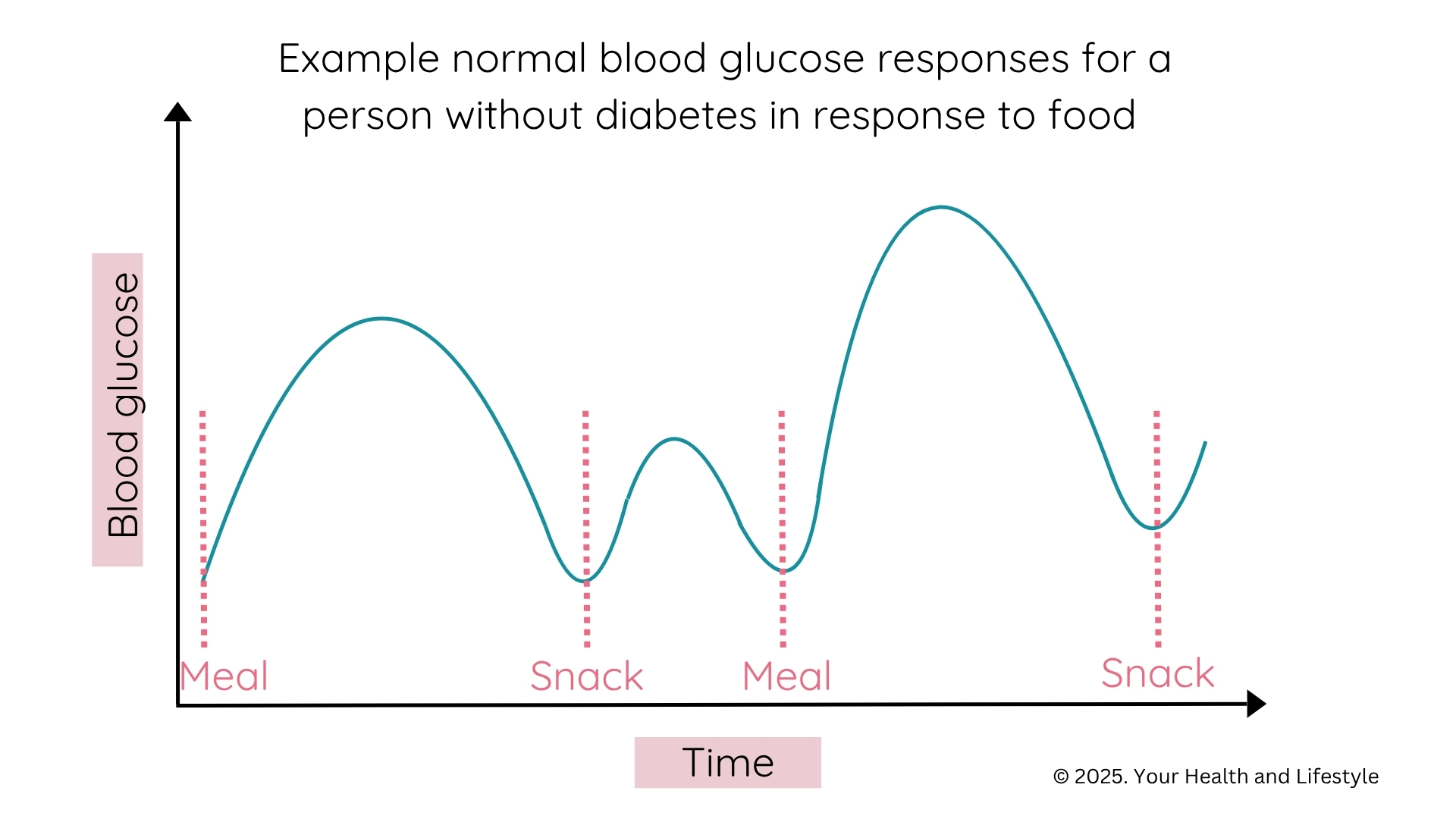
When you eat, your body breaks down food into glucose or sugar, which enters the bloodstream and provides energy. In response, your pancreas releases insulin. This hormone helps move sugar from your blood into your cells. It brings blood sugar back down to a healthy range and provides energy to your body’s cells.
This cycle happens naturally, every single day, whether you wear a CGM or not.
What Impacts Blood Sugar?
Many people think eating a high sugar diet causes diabetes, but that’s a myth. Type 2 diabetes occurs when the body doesn't respond well to insulin. Insulin is the hormone that helps manage blood sugar levels. Over time, this makes it harder to keep blood sugar balanced (4).
Diabetes is unlikely to happen from one single factor, but instead a combination. Genetics, lifestyle, and long-term health habits all play a role. For some people, family history is the biggest factor. For others, lifestyle choices over time have more impact (4,5).
Individual Factors (4)
-
Increasing age
-
Higher Body Mass Index (BMI)
-
Menopause status
-
Genetics
-
Gut microbiome
Lifestyle Factors (4)
-
Physical activity
-
Sleep quality
-
Smoking
-
Stress
-
Certain medications
Dietary Factors (4)
Nutrient combinations within meals (carbohydrates, protein & fat)
-
Meal timing and eating frequency
-
Alcohol intake
-
Caffeine intake
Blood sugar increases throughout the day are normal and not a direct cause of diabetes. In a healthy body, insulin naturally brings blood sugar levels back to balance (4).
When CGMs Are Necessary: Blood Sugar Monitoring in Diabetes
For people living with diabetes, the body lacks the ability to rebalance blood sugar. The pancreas may not produce enough insulin, or the body may struggle to use insulin properly (4). This makes it tougher to control blood sugar levels. It raises the risk of high levels (hyperglycaemia) and low levels (hypoglycaemia), both of which can lead to serious health issues (1).
This is where CGMs serve an important medical purpose. They continuously track blood sugar levels. This helps people see how their blood sugar reacts to food, exercise, stress, and medication (1). This helps people with diabetes adjust their insulin or lifestyle choices accordingly (3).
Benefits of wearing a CGM for people with diabetes include (3):
Reducing the risk of dangerous highs and lows, preventing emergency situations.
Identifying trends and patterns, allowing for better blood sugar management.
Enhancing long-term health by lowering complications from poorly controlled blood sugar in diabetes.
In this context, CGMs have strong support in diabetes care. However, people without diabetes do not get the same benefits.
Are CGMs Helpful for People Without Diabetes?
CGMs are popular in wellness, but studies don’t show clear benefits for those without diabetes (1, 2). Right now, there’s no strong evidence that tracking blood sugar leads to better long-term health (3).
Some studies suggest that CGM data can encourage short-term positive changes. For example, people might adjust their food choices or increase their activity. However, there isn't enough long-term data to see if these changes last (4).
CGMs offer important data for those with diabetes, but most people don’t need them. They can even cause more harm than good, especially if normal blood sugar fluctuations are wrongly considered a problem (2).
Blood Sugar Fluctuates And That’s Totally Normal
If you’ve ever seen a CGM graph (like the one above), you might be surprised by how much blood sugar goes up and down. But these changes are completely normal (2, 3). A rise in blood sugar after eating isn’t a cause for concern, it’s how your body processes food. It doesn’t mean a meal was ‘bad’ or needs to be avoided (2).
When Tracking Blood Sugar Starts to Cause More Stress Than It Solves
Constantly checking CGM data can cause some people to become preoccupied about blood sugar changes. Some even cut out healthy foods just to avoid small increases (2).
Research shows that constant tracking can increase anxiety about food. It may lead to an obsession with “perfect” numbers and even cause disordered eating in some people (2, 3). So, instead of supporting better health, CGMs could create unnecessary stress over normal bodily responses (2).
Why Blood Sugar Data Can Be Misleading Without Professional Guidance
Blood sugar fluctuations are influenced by more than just food. Exercise, stress, sleep, hormones, and illness all play a role (2, 3, 5). Without context, normal blood sugar changes can easily be considered a problem that needs to be ‘fixed'. This can lead to unnecessary worry and restrictions (2). Relying too heavily on CGM data without expert guidance may create more confusion than clarity.
So are CGMs helpful? If you don’t have diabetes, your body already knows how to handle blood sugar, it doesn’t need constant tracking. CGMs can inspire some people to improve their food and lifestyle choices. However, they might also cause unnecessary stress and anxiety for others (2, 3).
Connect With Your Body and Build Sustainable Habits Instead
Instead of relying on blood sugar data from a CGM, the most sustainable way to support your health is to reconnect with your body’s natural cues. Focus on internal signals instead of blood sugar readings. Pay attention to hunger, fullness, energy levels, and your overall wellbeing. Your body already knows how to regulate blood sugar, it’s time to trust it.
Focus on balance, variety, flexibility, and enjoyment in your diet instead of chasing numbers. Food isn’t only about blood sugar. It’s also about nourishment, enjoyment, cultural traditions, and social connections.
If you’re genuinely interested in supporting how your body handles your blood sugar, focus on sustainable habits:
Build balanced meals with a mix of carbohydrates, proteins, fats, and fibre to support stable energy levels.
Add movement you love into your routine. Don’t just exercise to manage your blood sugars.
Prioritise sleep and stress management, both of which play a major role in metabolic health.
Even if you don’t have diabetes, the same key habits hold true. Balanced meals, staying active, quality sleep, and stress management all support your health. These habits benefit you whether or not you wear a blood sugar monitor.
What's the verdict?
For people living with diabetes, CGMs are a valuable tool for managing blood sugar and preventing complications. But for everyone else, the science simply does not support their routine use (3).
Some research shows that real-time blood sugar data can promote healthier habits. This includes improved food choices and more exercise (4). However, studies are still looking at whether these changes lead to long-term health benefits (3). Currently, the evidence is limited. CGMs are not essential for health if your body regulates blood sugar well.
Focusing on sustainable habits helps your body manage blood sugar. This includes balanced meals, regular movement, quality sleep, and stress management. You can support your body without needing constant monitoring (2).
If you're looking to improve your health and feel your best through food and lifestyle choices (without using a blood sugar monitor), I’m here to help. Book a consultation today to build a plan that works for you, without the numbers game.
References
Klonoff, D.C., Nguyen, K.T., Xu, N.Y., Gutierrez, A., Espinoza, J.C. and Vidmar, A.P. (2022). Use of Continuous Glucose Monitors by People Without Diabetes: An Idea Whose Time Has Come? Journal of Diabetes Science and Technology, 17(6), p.193229682211108. doi:https://doi.org/10.1177/19322968221110830.
Guess, N. (2023). The growing use of continuous glucose monitors in people without diabetes: an evidence‐free zone. Practical Diabetes International, 40(5), pp.19–19. doi:https://doi.org/10.1002/pdi.2475.
Oganesova, Z, Pemberton, J. and Brown, A. (2024). Innovative solution or cause for concern? The use of continuous glucose monitors in people not living with diabetes: A narrative review. Diabetic medicine. doi:https://doi.org/10.1111/dme.15369.
Jarvis, P.R.E., Cardin, J.L., Nisevich-Bede, P.M. and McCarter, J.P. (2023). Continuous glucose monitoring in a healthy population: understanding the post-prandial glycemic response in individuals without diabetes mellitus. Metabolism, [online] 146(155640), p.155640. doi:https://doi.org/10.1016/j.metabol.2023.155640.
Berry, S., Bermingham, K., Smith, H., Gonzalez, J., Duncan, E., Valdes, A., Franks, P., Delahanty, L., Dashti, H., Davies, R., Hadjigeorgiou, G., Wolf, J., Chan, A. and Spector, T. (2023b). Glycaemic variability, assessed with continuous glucose monitors, is associated with diet, lifestyle and health in people without diabetes. Research Square (Research Square). [online] doi:https://doi.org/10.21203/rs.3.rs-3469475/v1.
